VPN vs Zero Trust Network Access: What Each One Actually Changes
vpn vs zero trust network access: learn what to check, what the result means, common mistakes, and how to verify the setup with MyIPScan.
Quick Answer
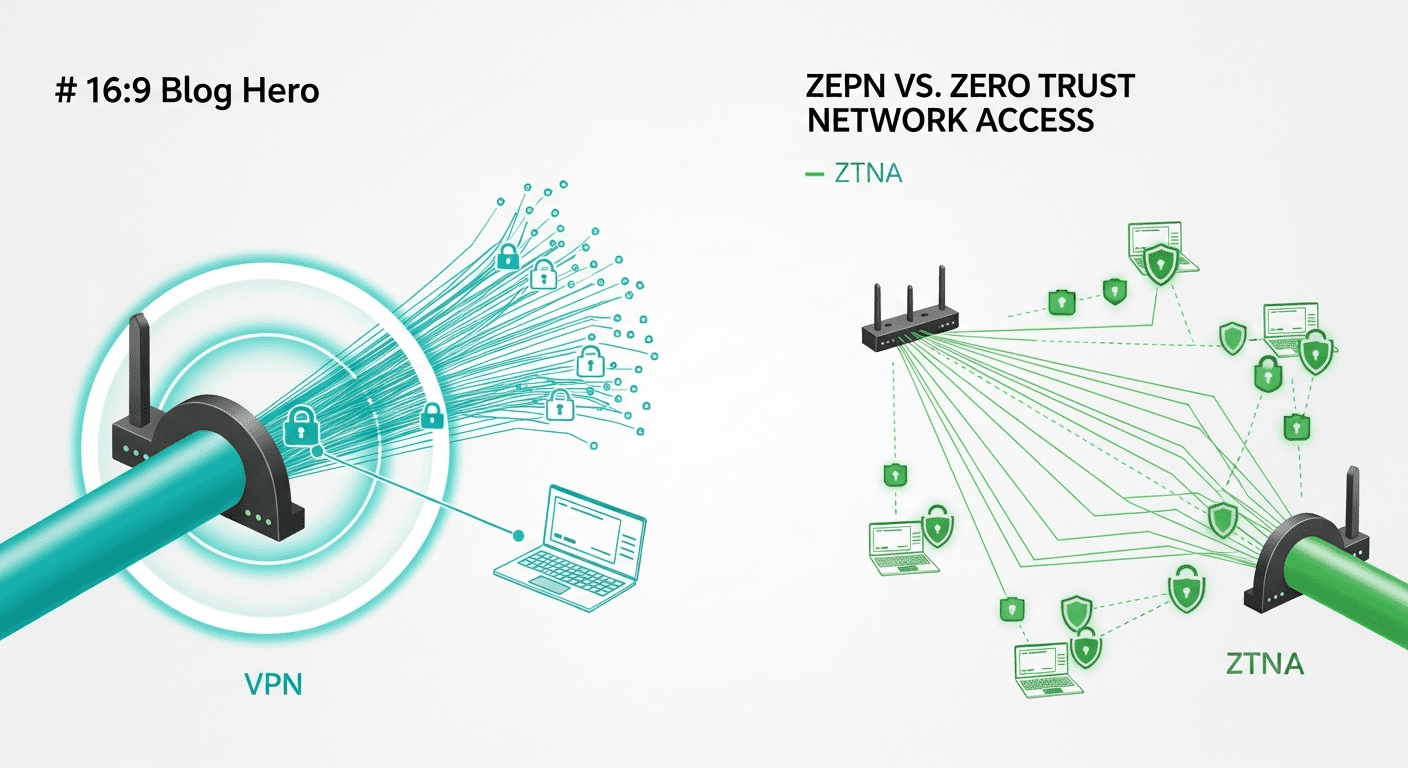
The question of VPN vs zero trust network access comes down to understanding what each approach actually changes at the network level and what remains visible regardless of the technology you choose. A VPN creates an encrypted tunnel that routes your traffic through a remote server, changing your public IP address and hiding your activity from your local ISP. Zero trust network access (ZTNA) takes a different approach: it verifies identity and device state before granting access to specific applications, without necessarily routing all traffic through a central gateway.
When comparing VPN vs zero trust network access, the practical difference shows up in what you can verify with network diagnostics. A VPN changes the visible endpoint that websites and services see—you can confirm this by checking your public IP before and after connecting. ZTNA focuses on application-level access control, often leaving your public IP unchanged while securing the path to corporate resources through identity verification and micro-segmentation.
Neither approach guarantees complete privacy on its own. Both operate at different layers of the network stack, and both leave certain signals untouched: signed-in accounts, browser fingerprints, payment history, and application telemetry can still identify you regardless of which technology you use. The choice between VPN and ZTNA depends on what you’re trying to protect and which signals matter most for your specific situation.
What VPN Actually Changes
A VPN establishes an encrypted tunnel between your device and a VPN server. All traffic that enters this tunnel appears to originate from the VPN server’s IP address rather than your own. This is the primary visible change you can verify with a public IP checker.
Public IP Address and Network Endpoint
The most obvious change is your public IP address. Before connecting to a VPN, your traffic shows your ISP’s assigned address. After connecting, websites see the VPN server’s address instead. You can verify this change using MyIPScan’s public IP checker before and after establishing the VPN connection.
The new IP address typically belongs to a data center or VPN provider’s network range. The associated location reflects where the VPN server is physically located, not your actual location. This geographic shift is approximate—IP geolocation databases map addresses to cities or regions, not precise coordinates.
ISP Visibility Reduction
Your ISP can see that you’re connected to a VPN server and can measure the volume of encrypted traffic, but cannot see the contents of that traffic or which specific websites you visit inside the tunnel. The ISP sees the VPN server’s IP address as your destination, not the final websites or services you access through the tunnel.
This matters for privacy because it prevents your ISP from building a detailed profile of your browsing habits, selling your traffic data, or throttling specific types of content. However, the VPN provider itself can see your traffic unless they implement a strict no-logs policy and technical measures to prevent traffic correlation.
DNS Query Routing
Most VPN clients route DNS queries through the VPN tunnel, sending them to the VPN provider’s DNS servers instead of your ISP’s resolvers. This prevents DNS-based tracking and ensures that domain name lookups don’t leak outside the encrypted tunnel. You should verify this behavior using a DNS leak test after connecting.
If the test shows your ISP’s DNS servers instead of the VPN provider’s servers, your DNS queries are leaking outside the tunnel—a configuration problem that undermines the privacy benefit. This is one of the most common misconfigurations that reduces VPN effectiveness.
Traffic Pattern Visibility
While your ISP cannot see the content of your VPN traffic, they can observe connection patterns: when you connect, how long sessions last, and the volume of data transferred. Traffic analysis can sometimes infer activity types based on timing and data volume, though this becomes less reliable with consistent VPN usage.
The VPN server’s network operator can see that traffic is exiting to specific destinations, though they cannot necessarily correlate it back to your identity if the VPN provider implements proper separation between authentication systems and traffic routing infrastructure.
What Zero Trust Network Access Actually Does
Zero trust network access operates on a fundamentally different principle: verify identity and device state before granting access to specific resources, and continuously re-verify throughout the session. Unlike a VPN that creates a broad network tunnel, ZTNA creates application-specific connections.
Identity-Based Access Control
ZTNA requires authentication before any network access is granted. This typically involves multi-factor authentication, device posture checks (verifying the device is running updated software, has endpoint protection enabled, and meets security policies), and user identity verification through an identity provider.
The access decision happens before the network connection is established. If authentication fails or the device doesn’t meet security requirements, no network path is created. This differs from a VPN, which typically grants broad network access after a single authentication step.
Application-Level Segmentation
ZTNA grants access to specific applications rather than entire network segments. A user authenticated for a particular business application can reach only that application’s servers, not the broader corporate network. This micro-segmentation limits lateral movement if credentials are compromised.
From a network diagnostics perspective, this means your public IP address often remains unchanged when using ZTNA. The connection to the specific application is secured and authenticated, but your general internet traffic continues to use your normal network path. This is a key distinction when evaluating VPN vs zero trust network access for privacy purposes.
Continuous Verification
ZTNA implementations continuously verify the user and device throughout the session. If device posture changes—for example, if endpoint protection is disabled or the device moves to an untrusted network—access can be revoked immediately.
VPNs typically verify credentials only at connection time. Once authenticated, the tunnel remains open until manually disconnected or the session times out, regardless of changes to device security posture or network context.
Context-Aware Access Policies
ZTNA systems evaluate multiple context signals: user identity, device health, location, time of access, and the sensitivity of the requested resource. Access policies can require stronger authentication for sensitive applications or deny access from certain geographic regions or network types.
This context awareness extends beyond the initial authentication. If a user’s behavior deviates from established patterns—accessing unusual resources, downloading abnormal data volumes, or connecting from unexpected locations—the system can require re-authentication or terminate the session.
Key Differences in Network Behavior
| Aspect | VPN | Zero Trust Network Access |
|---|---|---|
| Public IP Change | Yes, all traffic appears from VPN server IP | Usually no, application traffic is secured separately |
| Access Scope | Broad network access after authentication | Specific applications only, per-resource authorization |
| Authentication Model | Once at connection time | Continuous verification throughout session |
| Device Checks | Limited or none in consumer VPNs | Mandatory posture assessment before access |
| Traffic Routing | All traffic through encrypted tunnel | Only authorized application traffic, often direct routing |
| ISP Visibility | ISP sees only encrypted tunnel to VPN server | ISP sees normal traffic patterns to application endpoints |
| DNS Handling | Typically routed through VPN provider’s DNS | Varies by implementation, often unchanged |
| Lateral Movement Risk | Higher—full network access once authenticated | Lower—access limited to specific applications |
What Remains Visible Regardless of Technology
Both VPN and ZTNA operate at the network and transport layers. Neither technology automatically addresses signals that exist at the application layer or in browser and device behavior.
Account Identity and Session State
When you sign into an account—email, social media, shopping, banking—that service knows your identity regardless of your network path. Changing your IP address through a VPN doesn’t change the fact that you’ve authenticated with your credentials.
Session cookies and authentication tokens persist across network changes. If you’re signed into a service before connecting to a VPN, you remain signed in afterward, and the service continues to associate your activity with your account identity.
Browser and Device Fingerprints
Websites collect dozens of browser characteristics: screen resolution, installed fonts, timezone, language preferences, WebGL capabilities, canvas rendering signatures, and installed plugins. These combine to create a fingerprint that can identify your browser across different IP addresses.
Neither VPN nor ZTNA changes these browser-level signals. A website that fingerprinted your browser before you connected to a VPN can recognize the same browser afterward, despite the IP address change. Device fingerprinting works similarly at the operating system and hardware level.
Payment and Delivery Information
When you make purchases online, your payment method and shipping address identify you directly. Using a VPN to access a shopping site doesn’t prevent the merchant from knowing who you are when you enter your credit card and delivery address.
Payment processors maintain transaction histories tied to your payment instruments. These records exist independently of your network configuration and aren’t affected by VPN or ZTNA usage.
Application Telemetry and Analytics
Mobile apps and desktop software often include analytics SDKs that report usage data, crash reports, and performance metrics directly to the developer. These reports typically include device identifiers, app version, and usage patterns.
This telemetry usually bypasses VPN tunnels through split-tunneling configurations or operates at the application layer where network-level privacy tools have limited effect. ZTNA focuses on corporate application access and doesn’t typically address consumer application telemetry.
Practical Decision Points
Choosing between VPN and ZTNA depends on your specific requirements and threat model. Here are the concrete factors that should guide your decision.
When VPN Makes More Sense
VPNs are appropriate when you need to change your visible network endpoint for all traffic, not just specific applications. This includes:
- Hiding your browsing activity from your ISP or local network operator
- Accessing content that’s restricted based on geographic IP address location
- Protecting all network traffic on untrusted networks like public Wi-Fi
- Changing your apparent location for all applications simultaneously
- Simple setup without requiring enterprise identity infrastructure
VPNs work well for individual users who want broad privacy protection without managing complex access policies. The trade-off is that you’re shifting trust from your ISP to your VPN provider—you need confidence in the provider’s logging practices and security measures.
When ZTNA Makes More Sense
ZTNA is designed for organizational use cases where you need granular control over who can access which resources:
- Providing remote access to corporate applications without exposing the entire network
- Enforcing device security requirements before granting access
- Implementing least-privilege access policies at the application level
- Continuous verification of user and device state throughout sessions
- Reducing attack surface by eliminating broad network access
- Integrating with existing identity providers and security tools
ZTNA requires more infrastructure and management overhead. It’s not typically a consumer privacy tool—it’s an enterprise security architecture that happens to improve privacy as a side effect of its access control model.
Hybrid Approaches
Some organizations implement both technologies for different purposes. A common pattern is using ZTNA for access to corporate applications while providing VPN access for scenarios that require full network connectivity, such as accessing network file shares or legacy applications that can’t be individually secured.
Individual users might use a consumer VPN for general privacy while their employer provides ZTNA access to work resources. These technologies operate independently and can coexist on the same device.
Verification Steps You Can Perform
Regardless of which technology you choose, you should verify that it’s working as expected. Here are the practical checks you can perform.
For VPN Connections
- IP address check: Visit a public IP checker before and after connecting to verify your IP address changes to the VPN server’s address
- DNS leak test: Confirm that DNS queries are routed through the VPN tunnel, not your ISP’s resolvers
- WebRTC leak test: Check that your real IP address isn’t exposed through WebRTC connections in your browser
- Connection stability: Monitor for unexpected disconnections that might expose your real IP address
- Kill switch verification: If your VPN includes a kill switch, test that it actually blocks traffic when the VPN disconnects
For ZTNA Implementations
- Access scope verification: Confirm that you can only reach authorized applications, not the broader network
- Device posture enforcement: Test that access is denied when device security requirements aren’t met
- Session continuity: Verify that sessions terminate when expected based on policy (network change, timeout, posture change)
- Authentication requirements: Confirm that multi-factor authentication is required as configured
- Unauthorized access attempts: Test that access to non-authorized resources is properly blocked
Common Misconceptions
VPN Equals Complete Anonymity
A VPN changes your visible IP address but doesn’t make you anonymous. Account logins, browser fingerprints, payment information, and behavioral patterns can all identify you regardless of your IP address. VPNs provide privacy from your ISP and change your apparent location, but they don’t eliminate all identifying information.
ZTNA Replaces All VPN Use Cases
ZTNA is designed for application access control, not for changing your network endpoint or hiding your traffic from your ISP. If your goal is to prevent your ISP from seeing which websites you visit, ZTNA doesn’t address that use case. The technologies serve different purposes and aren’t direct replacements for each other.
Either Technology Protects Against All Threats
Both VPN and ZTNA address specific aspects of network security and privacy. Neither protects against phishing, malware, social engineering, or application-layer vulnerabilities. They’re components of a broader security strategy, not complete solutions on their own.
Free VPNs Provide the Same Protection as Paid Services
Free VPN services need to monetize somehow. Some inject advertising, collect and sell usage data, or provide inadequate security. The privacy benefit of a VPN depends entirely on the provider’s practices and infrastructure. Free services often have incentives that conflict with user privacy.
Performance and Latency Considerations
VPN Performance Impact
VPN connections add latency because traffic must travel to the VPN server before reaching its final destination. The performance impact depends on the distance to the VPN server, the server’s capacity and load, and the encryption overhead.
You can measure this impact by running speed tests before and after connecting to the VPN. Expect some reduction in throughput and increase in latency—the question is whether the impact is acceptable for your use case. VPN servers that are geographically closer to you and your destination typically perform better than distant servers.
ZTNA Performance Characteristics
ZTNA implementations often use direct connections between the client and the application, avoiding the performance penalty of routing all traffic through a central gateway. This can provide better performance than VPN for accessing specific applications, especially when those applications are geographically distributed.
However, the authentication and continuous verification overhead can add latency to connection establishment. Once the connection is established and verified, application performance is often similar to direct access.
Privacy Implications for Different Scenarios
Public Wi-Fi Networks
On untrusted networks like coffee shop Wi-Fi, a VPN provides protection against local eavesdropping by encrypting all traffic between your device and the VPN server. Other users on the same network can’t intercept your traffic or see which sites you’re visiting.
ZTNA protects access to specific corporate applications but doesn’t encrypt your general internet traffic. If you’re checking personal email or browsing websites on public Wi-Fi, ZTNA doesn’t provide protection for that traffic.
ISP Data Collection
If your concern is preventing your ISP from collecting data about your browsing habits, a VPN addresses this by encrypting traffic and hiding destination websites. Your ISP sees only that you’re connected to a VPN server.
ZTNA doesn’t typically hide your general browsing from your ISP—it secures access to specific applications. Your ISP can still see which websites you visit outside of ZTNA-protected applications.
Corporate Network Access
For accessing corporate resources remotely, ZTNA provides better security than traditional VPN by limiting access to specific applications and continuously verifying device posture. This reduces the risk of compromised credentials leading to broad network access.
VPN provides simpler access to legacy applications and network resources that can’t be individually secured, but at the cost of broader network exposure if credentials are compromised.
FAQ
Does ZTNA hide my IP address like a VPN does?
No, ZTNA typically doesn’t change your public IP address. It creates secure, authenticated connections to specific applications, but your general internet traffic continues to use your normal network path with your ISP-assigned IP address. If you need to change your visible IP address, a VPN is the appropriate technology. ZTNA focuses on access control and continuous verification rather than changing your network endpoint.
Can I use VPN and ZTNA at the same time?
Yes, VPN and ZTNA can operate simultaneously on the same device. Many organizations provide ZTNA access to corporate applications while employees use personal VPNs for general privacy. The technologies operate independently—ZTNA handles access to specific corporate resources while the VPN routes other traffic through an encrypted tunnel. However, you should verify that both are configured correctly and not interfering with each other’s operation.
Which approach is better for remote work security?
ZTNA generally provides better security for remote work because it implements least-privilege access, continuous verification, and device posture checks. It limits access to only the specific applications each user needs, reducing the attack surface if credentials are compromised. VPN provides broader network access, which is simpler to set up but creates more risk. The best choice depends on your specific applications, infrastructure, and security requirements. Organizations with modern cloud applications often benefit more from ZTNA, while those with legacy on-premises systems may still need VPN for certain use cases.
Will a VPN prevent websites from tracking me?
A VPN changes your IP address, which prevents IP-based tracking, but websites use many other methods to identify and track visitors. Browser fingerprinting, cookies, account logins, and behavioral analysis can all track you regardless of your IP address. If you’re signed into an account, the service knows who you are regardless of your VPN connection. VPNs are one component of privacy protection, but they don’t eliminate all forms of tracking. You need to combine VPN usage with other privacy measures like cookie management, browser privacy settings, and careful consideration of which accounts you sign into.
How do I verify my VPN is actually working?
Perform these checks after connecting to your VPN: First, check your public IP address to confirm it shows the VPN server’s address, not your ISP-assigned address. Second, run a DNS leak test to verify that DNS queries are routed through the VPN tunnel. Third, check for WebRTC leaks that might expose your real IP address. Fourth, verify that your apparent location matches the VPN server location. If any of these tests show your real IP address or ISP information, your VPN isn’t configured correctly or has a leak that undermines its privacy benefit.
Is ZTNA only for large enterprises?
ZTNA was originally designed for enterprise use and requires more infrastructure than consumer VPN services. However, cloud-based ZTNA solutions have made the technology more accessible to smaller organizations. The complexity and cost still make it impractical for individual consumer use—ZTNA is fundamentally an organizational access control technology, not a personal privacy tool. Small businesses with remote workers and cloud applications can benefit from ZTNA, but individual users seeking privacy protection should look to VPN services instead.