Inbound vs Outbound Firewall Rules: What Each One Controls
inbound vs outbound firewall rules explained: learn what to check, what the result means, common mistakes, and how to verify the setup with MyIPScan.
Quick Answer
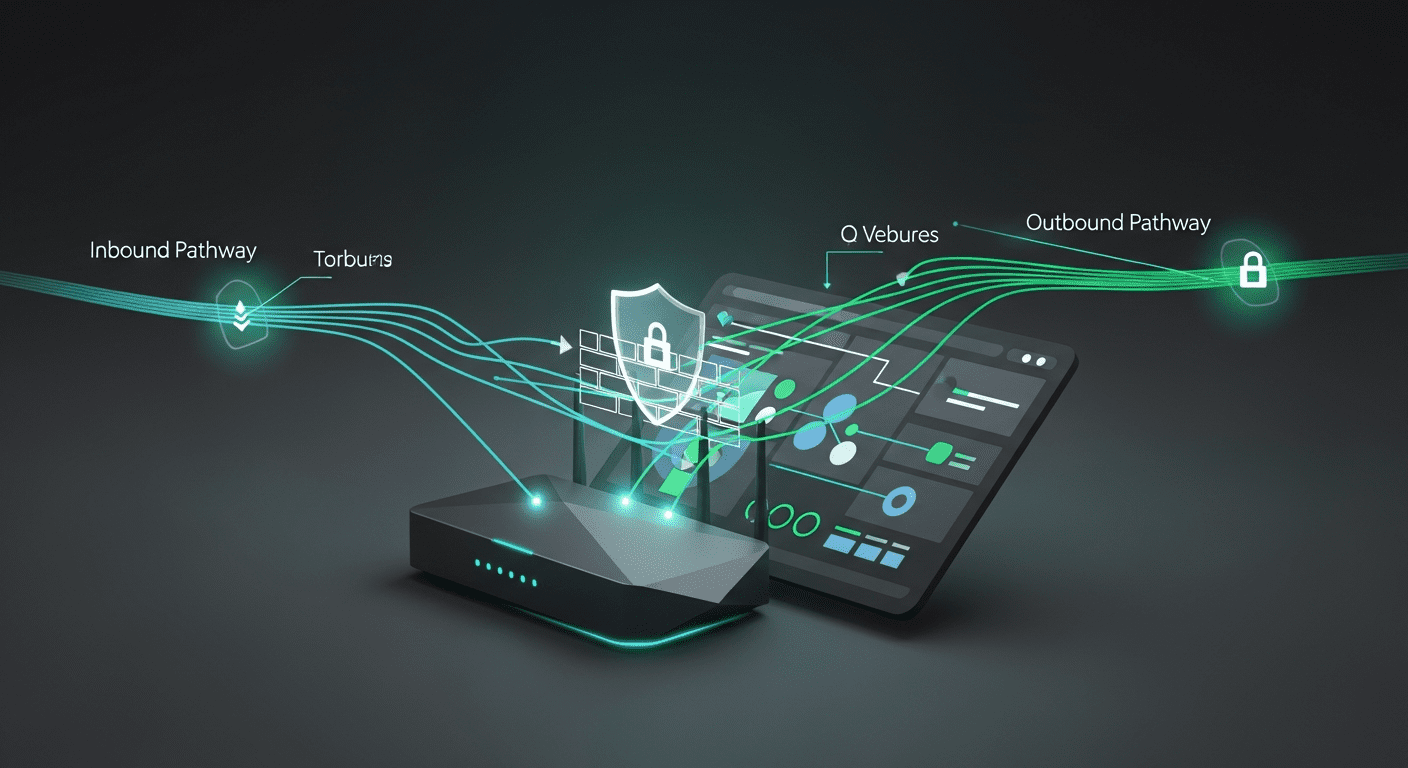
Think of your computer’s firewall as the security team for a secure building. In this analogy, inbound vs outbound firewall rules explained is about understanding the two primary jobs of that team. Inbound rules act like the bouncer at the front door, checking IDs and deciding who is allowed to enter your building (your computer) from the outside world (the internet). They protect you from uninvited guests like hackers and network scans. Outbound rules are like the security guard at the exit, inspecting everything that tries to leave. They prevent sensitive information from being secretly sent out and can stop malware already inside your computer from communicating with its creator. Both are critical for a complete security and privacy posture; one protects you from external threats, while the other contains internal ones.
Why Your Firewall Needs Both Inbound and Outbound Rules
In the early days of the internet, digital security was often compared to building a castle. You built high walls, dug a deep moat, and posted a guard at the gate. This “perimeter defense” model focused almost exclusively on stopping threats from getting in. In firewall terms, this meant a heavy reliance on inbound rules. The primary goal was to create a hardened exterior to repel attacks from the vast, untrusted internet.
This approach is still fundamental, but it’s no longer sufficient. The modern threat landscape is far more complex. Threats don’t just knock on the front door; they can be carried in, Trojan-horse style, through phishing emails, malicious downloads, or even compromised software updates. Once inside, this malicious software needs to communicate with its home base—to receive instructions, upload stolen data, or spread to other devices. This is where outbound rules become your non-negotiable second line of defense.
- Inbound Rules (The Castle Wall): This is your first layer of defense. It assumes everything outside is potentially hostile and blocks it by default. You then create specific exceptions (rules) for traffic you trust, like allowing your web browser to receive data from a website you requested.
- Outbound Rules (The Internal Containment): This is your critical safety net. It assumes that a threat might already be inside your walls. Outbound rules control what your applications are allowed to say to the internet. If a piece of spyware lands on your system, a well-configured outbound firewall can block it from ever “phoning home,” rendering it useless.
Relying only on inbound protection is like having a locked front door but allowing anyone inside to mail out your secrets. A modern, effective security strategy requires controlling traffic in both directions.
Inbound Firewall Rules: Your Digital Bouncer
Inbound rules are all about managing connections initiated from outside your device. Every time another computer, server, or device on the internet tries to “talk” to your computer first, an inbound firewall rule is checked to see if that connection is permitted. The default stance for most modern firewalls, like Windows Defender, is “deny all” for inbound traffic unless a specific rule allows it. This is a powerful security principle known as “default deny.”
Primary Goal: To protect your device’s services and open ports from being accessed and exploited by unauthorized external entities. This prevents a wide range of attacks, including:
- Port Scanning: Hackers scan ranges of IP addresses looking for open ports, which are like unlocked doors to your system. Inbound rules keep these doors invisible or closed.
- Direct Attacks: Exploits that target vulnerabilities in network services (like file sharing or remote desktop) are blocked before they can even reach the service.
- Worms and Malware Propagation: Self spreading malware often works by scanning for and infecting other vulnerable machines on the network. Strong inbound rules stop this in its tracks.
Practical Examples of Inbound Rules
While the default is to block, there are many legitimate reasons to create “allow” rules for inbound traffic. You are essentially adding a specific name to the bouncer’s approved guest list.
- Hosting a Game Server: If you want to host a multiplayer game session for your friends, the game needs to act as a server. You must create an inbound rule that allows other players’ computers to connect to your computer on the specific network port the game uses.
- Using Remote Desktop: To access your work computer from home, you need to allow incoming connections for the Remote Desktop Protocol (RDP), which typically uses port 3389. This rule should be highly restricted, perhaps only allowing connections from a specific IP address, to be secure.
- Peer-to-Peer (P2P) Applications: File sharing applications like torrent clients often require open inbound ports to allow other peers to connect to you and download pieces of a file, improving overall network speed.
- Running a Local Web Server: If you are a developer testing a website on your own machine, you would create an inbound rule to allow traffic on ports 80 (HTTP) and 443 (HTTPS) so you can access it from other devices on your local network.
Outbound Firewall Rules: Controlling What Leaves the Building
Outbound rules manage connections initiated by software running on your device that are trying to reach the internet or other network devices. This is a crucial, and often overlooked, aspect of digital privacy and security. While inbound rules protect you from the outside world, outbound rules protect the outside world—and your own data—from potentially malicious or overly “chatty” software on your machine.
Unlike inbound rules, the default setting for outbound traffic on most consumer firewalls is “allow all.” This is done for convenience; otherwise, you’d have to manually approve every single application that needs internet access, which would be frustrating for most users. However, for those seeking higher security and privacy, switching to a “deny all” outbound policy and creating specific “allow” rules provides immense control.
Primary Goal: To prevent unauthorized data exfiltration and stop compromised applications from communicating with malicious servers. This helps to:
- Contain Malware: If malware infects your system, it’s often useless until it can contact its command and-control (C2) server. A strict outbound firewall can block this communication, effectively neutralizing the threat.
- Prevent Data Leaks: Stop sensitive documents, credentials, or personal information from being uploaded without your knowledge by spyware or leaky applications.
- Control Application Behavior: You can decide exactly which programs are allowed to access the internet. Don’t want your calculator or photo editor to have network access? An outbound rule can enforce that.
Practical Examples of Outbound Rules
Configuring outbound rules is about taking a proactive stance on what your software is allowed to do. Here are some powerful use cases:
- Blocking Adware and Telemetry: Many free applications support themselves by displaying ads or collecting usage data (telemetry). You can often identify the executable responsible for these functions and create an outbound rule to block its internet access, without disabling the core application.
- Creating a “Jail” for Untrusted Software: If you need to run a program you don’t fully trust, you can install it and then immediately create an outbound rule to block all its network connections. This allows you to use its offline features without worrying about what it might be doing in the background.
- Preventing Unwanted Automatic Updates: Some applications force updates in a way that disrupts your workflow. By identifying the update executable, you can create an outbound rule to block it, allowing you to update on your own schedule.
- Enhancing Privacy: For the privacy-conscious, blocking internet access for applications that have no business being online (e.g., a simple text editor) is a great way to reduce your digital footprint.
Inbound vs. Outbound: A Head-to-Head Comparison
To make the distinction crystal clear, here is a direct comparison of the key attributes of inbound and outbound firewall rules. Understanding this table is the core of getting inbound vs outbound firewall rules explained correctly.
| Feature | Inbound Firewall Rule | Outbound Firewall Rule |
|---|---|---|
| Traffic Direction | Flows from the network/internet to your device. | Flows from your device to the network/internet. |
| Connection Initiator | An external computer or server. | An application or process on your local device. |
| Primary Purpose | Defense against external threats (e.g., hacking, port scans). | Containment of internal threats and data leakage (e.g., malware, spyware). |
| Common Default Policy | Deny All, except for rules you specifically create to allow traffic. | Allow All, except for rules you specifically create to block traffic. |
| Security Analogy | A bouncer at the front door checking an approved guest list. | A security guard at the exit checking bags and preventing theft. |
| Example “Allow” Use Case | Allowing friends to connect to your Minecraft server. | Allowing your web browser to access the internet. |
| Example “Block” Use Case | Blocking a known malicious IP address from ever contacting you. | Blocking a suspicious application from “phoning home.” |
How to Check and Configure Your Firewall Rules (Windows Defender Example)
Theory is great, but practical skills are better. Let’s walk through how to view and create rules using the powerful, built-in firewall in Windows. This hands-on exercise will solidify your understanding.
Which Windows version: The walkthrough below applies to Windows 10 and Windows 11. Both versions ship the same advanced firewall console — opened by typing wf.msc and pressing Enter — and it appears as “Windows Defender Firewall with Advanced Security” with an identical “Inbound Rules” / “Outbound Rules” layout on either version, so every step and screen described here matches what you’ll see regardless of which one you’re running.
Accessing the Windows Defender Firewall with Advanced Security
The standard Windows Firewall settings are too basic. You need the advanced interface to get granular control.
- Press the Windows Key + R to open the “Run” dialog box.
- Type
wf.mscand press Enter. - This opens the “Windows Defender Firewall with Advanced Security” console. In the left-hand pane, you will see “Inbound Rules” and “Outbound Rules.” This is your command center.
Reading an Existing Rule
Click on either “Inbound Rules” or “Outbound Rules” to see a list of all current rules. It can be overwhelming at first, but focus on these key columns:
- Name: A description of the rule. Well-named rules are self-explanatory.
- Profile: Shows which network profile the rule applies to (Private, Public, or Domain). This is crucial for context-aware security.
- Enabled: Yes or No. A disabled rule has no effect.
- Action: The most important column. It will say either Allow or Block.
- Program: Specifies the exact application path (e.g., `C:\Program Files\Google\Chrome\Application\chrome.exe`) the rule applies to.
- Protocol and Ports: Shows the network protocol (like TCP or UDP) and the specific port numbers involved.
By sorting and filtering this list, you can quickly audit what your computer is allowed to do. For example, you can sort by the “Action” column to see everything that is explicitly blocked.
Creating a New Rule: A Practical Walkthrough
Let’s create a simple but effective outbound rule to block an application from accessing the internet. We’ll use Notepad as a safe example, since it has no reason to be online.
- In the `wf.msc` console, click on “Outbound Rules” in the left pane.
- In the right “Actions” pane, click “New Rule…”
- The New Rule Wizard will start. For “Rule Type,” select “Program” and click Next.
- Select “This program path:” and click “Browse…”. Navigate to `C:\Windows\System32\` and select `notepad.exe`. Click Next.
- For “Action,” select “Block the connection.” This is the crucial step. Click Next.
- For “Profile,” leave all three boxes (Domain, Private, Public) checked to ensure the rule applies on all networks. Click Next.
- Give your rule a clear, descriptive name, like “Block Notepad Internet Access”. You can add a description for future reference. Click “Finish.”
That’s it. You have successfully created an outbound rule. Notepad is now prevented from making any outgoing network connections. This same process can be used to control any application on your system.
Common Pitfalls and Best Practices
Managing firewall rules is a powerful skill, but it’s easy to make mistakes. Keep these best practices in mind to stay secure and avoid frustration.
- The “Allow All” Trap: The default outbound policy is “allow all” for usability. For maximum security, advanced users should consider changing the default to “block all” and creating specific “allow” rules for trusted applications. This is more work but provides superior protection.
- Profile Awareness is Key: Understand the difference between network profiles. “Private” is for your trusted home or work network. “Public” is for untrusted networks like coffee shops or airports. Your rules should be stricter on Public profiles.
- Clean Up Old Rules: When you uninstall software, it sometimes leaves its firewall rules behind. Periodically review your rules and delete any that apply to applications you no longer use. An old “allow” rule could be a potential security hole.
- Don’t Just Disable to “Fix” Things: If an application isn’t working, it’s tempting to just disable the firewall. This is a terrible idea. The correct approach is to diagnose the problem. Use the firewall’s logging features to see what’s being blocked and then create a specific, narrow “allow” rule to fix it.
- A Firewall is One Layer: A firewall is a critical part of a layered defense, but it’s not a silver bullet. It should be combined with regular software updates, a good antivirus program, and cautious user behavior. While you’re managing your firewall, it’s also a good idea to see what information you’re broadcasting to the world by checking your connection details at MyIPScan.
FAQ
Should I block all outbound traffic by default?
For the average user, this is not recommended. It’s the most secure configuration, known as a “default deny” or “whitelist” approach, but it requires significant effort. You would need to manually create an “allow” rule for every single application and system service that needs internet access. This can be complex and time consuming. For security professionals, developers, or highly privacy-conscious individuals, it is the gold standard. For most others, the default “allow all” outbound policy combined with specific “block” rules for untrusted software is a more practical balance of security and usability.
Does a VPN replace the need for firewall rules?
No, they serve different but complementary purposes. A VPN encrypts your connection and masks your IP address, protecting your privacy from your ISP and the websites you visit. A firewall, however, controls which applications on your device are allowed to transmit data in the first place. An outbound firewall rule can stop a malicious app from sending your data out, even over the encrypted VPN tunnel. Using both a VPN and a properly configured firewall provides comprehensive, layered protection.
What’s the difference between a software firewall and a hardware firewall?
A software firewall (like Windows Defender) runs directly on your computer (the endpoint). It has deep insight into which specific applications are trying to make connections. A hardware firewall is typically a feature of your internet router and protects your entire local network from the internet. It sees traffic to and from devices on your network but doesn’t know which specific application on a device is sending the traffic. Most home networks use both: the router’s hardware firewall provides the first line of inbound defense for the whole network, and each device’s software firewall provides more granular, application-aware control for both inbound and outbound traffic.
My game/application isn’t working. Is it a firewall issue?
It’s a very common cause. Many online games and P2P applications require specific inbound and outbound ports to be open. If the application suddenly stops working after a firewall update or a settings change, the firewall is a prime suspect. As a temporary diagnostic step, you can disable the firewall to see if the application starts working. If it does, you must immediately re-enable the firewall and then create the necessary “allow” rules for that specific program. Never leave your firewall disabled.
How do inbound and outbound rules relate to port forwarding?
Port forwarding is a specific type of inbound rule that you configure on your router (your hardware firewall). When your router receives an incoming connection request on a specific port, a port forwarding rule tells it to pass that traffic along to a specific device inside your local network. For example, to host a game server, you would forward the game’s port on the router to the internal IP address of your gaming PC. You would also need an inbound “allow” rule on your PC’s software firewall for that same port to complete the connection.
Can a misconfigured firewall rule leak my data?
Absolutely. An overly permissive outbound rule (or the lack of a necessary “block” rule) can allow malware or spyware to freely send your personal information to an attacker. Similarly, an incorrect inbound “allow” rule can expose a vulnerable service on your computer to the entire internet. This is precisely why a clear understanding of inbound vs outbound firewall rules explained is not just a technical exercise—it’s a fundamental skill for digital privacy. Misconfigurations can also lead to other issues, which is why it’s wise to also understand concepts like our guide on what is a DNS leak to get a fuller picture of your network’s behavior.